Vinegar Through the Ages: A Short History and How to Use It Today
The sharp, bright sting of vinegar is familiar to most cooks: a few drops can brighten a dressing, tame a sauce, or preserve a jar of seasonal produce. Less obvious is how deeply vinegar is woven into culinary traditions around the world. It is one of those pantry staples that carries a small, quiet history alongside very practical uses.
A tangible ingredient from antiquity
Vinegar is one of the oldest processed foods. Archaeological and textual evidence shows people intentionally fermenting alcoholic liquids into acidic ones thousands of years ago. Ancient Mesopotamians and Egyptians used sour liquids for flavor and preservation; classical Greek and Roman writers mention vinegar as a common condiment and a component of sauces.
For much of its history, vinegar was a byproduct of fermentation—when wine, beer, or cider was left exposed to air and naturally occurring bacteria converted alcohol into acetic acid. Regional availability of raw materials shaped the vinegars people produced: grape-based vinegars in wine-growing regions, rice vinegars in East Asia, and cider vinegar where apples were abundant. That variety is the legacy we still enjoy in modern pantries.
How varieties developed and what sets them apart
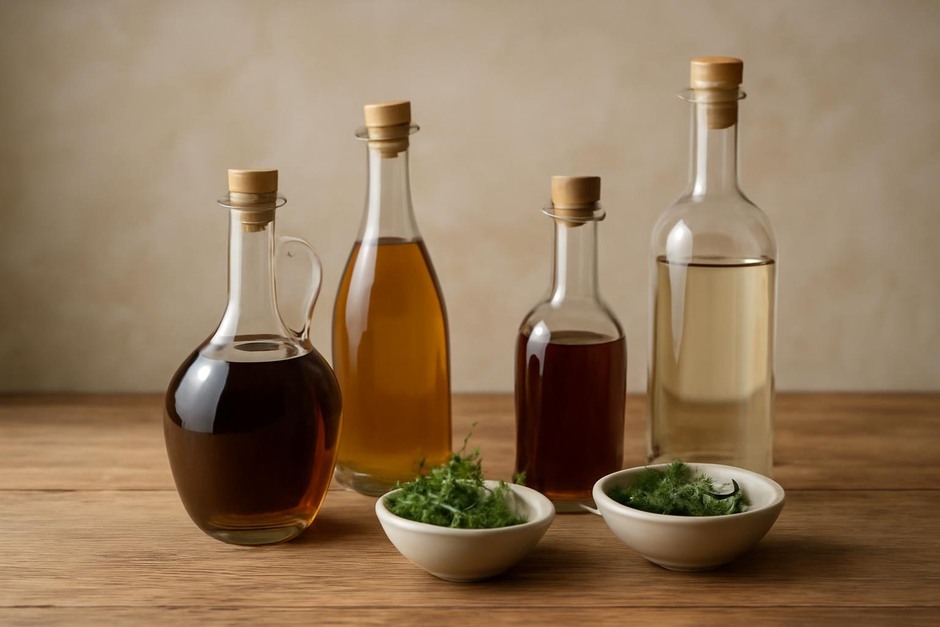
Today’s vinegars differ in two main ways: the source liquid (grape, apple, rice, malt, etc.) and the production method (traditional slow fermentation, rapid industrial processes, or aging and concentration for specialty vinegars). Those differences create distinct flavor profiles and culinary roles.
- Wine vinegar: Made from red or white wine, it often carries fruity or tannic notes and is a go-to for vinaigrettes and reductions.
- Balsamic: Originating in Italy, true balsamic vinegar is aged and concentrated, giving it sweetness, viscosity, and complex caramelized flavors suitable for finishing dishes.
- Cider vinegar: Apple-based and slightly fruity, it’s versatile for dressings, quick pickles, and sauces.
- Rice vinegar: Milder and slightly sweet, common in East Asian cuisines and gentle enough for simple dressings and sushi rice.
- Malt vinegar: Made from malted barley, with a toasty, robust character often paired with fried foods or hearty dishes.
Understanding these differences helps you choose the right vinegar for balance rather than defaulting to whichever bottle sits closest.
Everyday techniques: cooking with vinegar
Vinegar’s culinary power lies in balance. Acidity can brighten, lift heavy flavors, and emphasize sweetness. A few practical techniques put that power to use:
- Finish with acid: Add a splash of vinegar at the end of cooking—stews, braises, or pan sauces—to cut richness and clarify flavors.
- Layer acidity: In dressings, start with a mild acid like rice or apple cider vinegar, then finish with a sharper note like white wine or sherry vinegar for complexity.
- Reduce for concentration: Simmering vinegar (especially wine or balsamic) with aromatics and a bit of sugar produces a glaze that clings to roasted vegetables or grilled meats.
- Balance sugar and salt: In pickling or quick-preserve recipes, calibrate sugar and salt to the vinegar’s strength and the desired end flavor. Mild vinegars may need less sugar to avoid overly sweet results.
Simple recipes benefit from restraint: start with a small amount, taste, and add more. Vinegar’s effect is immediate, and a little goes a long way.
Small-scale preservation, cleaning, and pantry hacks
Historically vinegar was prized for preservation; today, it remains a useful tool for small-batch pickling. A basic quick-pickle approach uses equal parts vinegar and water, salt, and sugar to taste, plus spices and hot peppers if desired. Pour the hot brine over thinly sliced vegetables, let cool, and refrigerate—flavors develop over a day or two.
Apart from food, vinegar has practical applications around the kitchen. Its acidity can help neutralize mineral deposits on kettles or gently remove film from glassware. When using vinegar for cleaning, use plain white vinegar and avoid mixing it with bleach or other strong chemicals.
Storing vinegars is uncomplicated: keep them sealed in a cool, dark place. Most are shelf-stable for extended periods; specialty aged vinegars like true balsamic may gain subtler notes over time in an unopened bottle.
Conclusion
From a fermentation byproduct to a carefully aged condiment, vinegar carries a long culinary story into contemporary kitchens. Knowing a little about its history and varieties makes it easier to reach for the right bottle with purpose—whether you are lifting a sauce, making a lively vinaigrette, or preserving a seasonal harvest. Treat vinegar as a tool for balance and contrast, and it will repay simple experiments with clear, bright results.